
Garage door spring replacement cost usually lands somewhere between about $150 and $350 for a single extension spring job and about $200 to $500 or more for torsion springs in 2026, with labor included. These are general national-style ranges, not a quote. Your final number depends on the spring type, the door’s weight, whether one or two springs are replaced and what else the technician finds.
Below, we break down what you are paying for, how torsion and extension springs differ, what affects pricing in Washington DC and Maryland, and why this is not a job to try yourself.
Typical Garage Door Spring Replacement Cost in 2026
Most homeowners fall into a fairly predictable range. Treat these figures as planning estimates only, since parts, shop rates and door setups vary from company to company.
| Job | Typical range (parts and labor) |
|---|---|
| Extension spring replacement (pair) | $150 to $350 |
| Torsion spring replacement (one or two springs) | $200 to $500 |
| Heavy, insulated or oversized door upgrades | Often higher, depending on spring size |
| Spring plus cables, rollers or other parts | Add the cost of each extra part |
A free estimate is the best way to get a real number for your door. At Captain Smoothlift we explain what is wrong and the options before any work starts.
Torsion vs Extension Springs
The spring type is the biggest single factor in the price, and it also decides how the repair is done.
Torsion springs
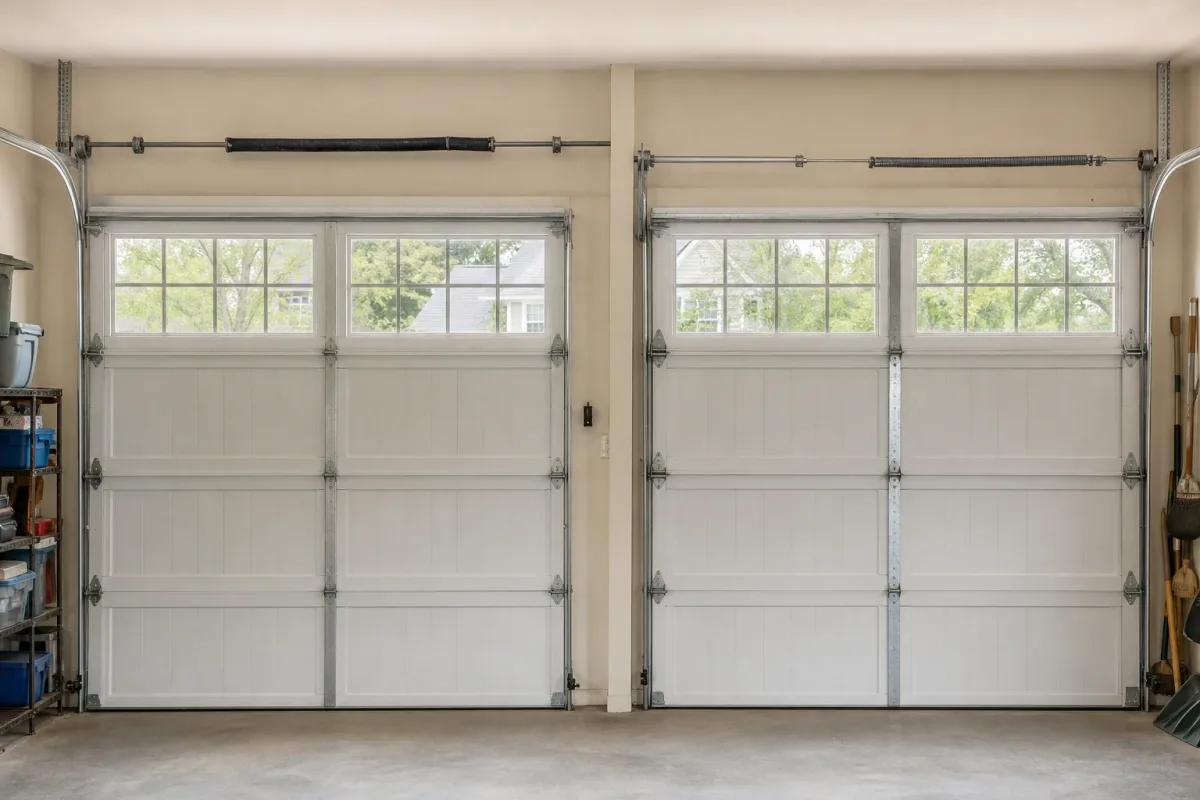
Torsion springs mount on a metal bar above the door opening and twist to lift the door. They are common on newer homes and heavier doors, and they tend to last longer and run more smoothly. They cost more to replace because the parts are heavier duty and the job takes more skill.
Extension springs
Extension springs run along the horizontal tracks on each side of the door and stretch as the door closes. They are usually cheaper to buy and replace. They are also common on older homes, and they need safety cables so a broken spring does not whip across the garage.
Why springs usually get replaced in pairs
If your door has two springs and one breaks, the other is the same age and has seen the same number of cycles. Replacing both keeps the door balanced and usually saves a second service visit soon after. Many technicians recommend this for that reason.
What Goes Into the Labor Cost
Labor is often half or more of the bill, and for good reason. A spring replacement is not just swapping a part.
- Releasing tension safely and securing the door.
- Removing the broken spring and hardware.
- Measuring wire size, length and winding direction to match the door’s weight.
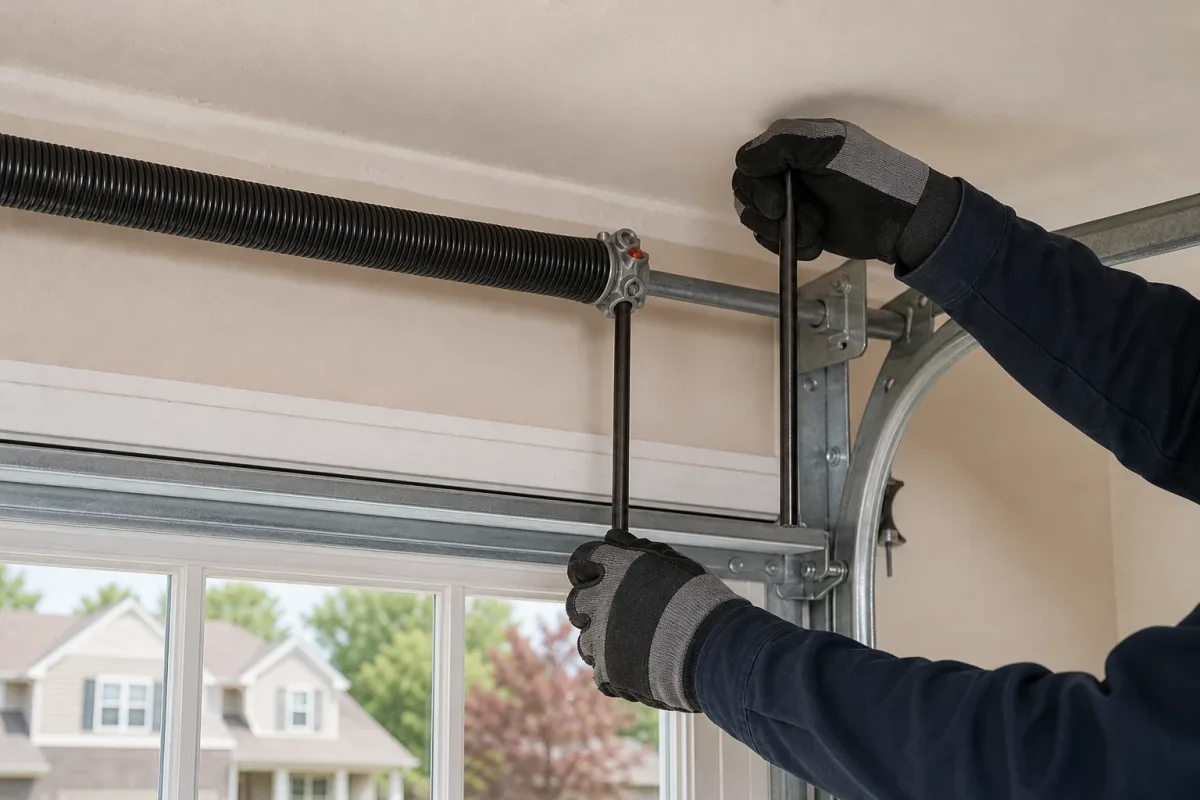
- Installing and winding new springs with proper tools.
- Balancing the door and testing the opener and safety features.
Springs that are the wrong size can make a door heavy, noisy or unsafe, so matching them correctly matters more than the sticker price of the part.
Washington DC and Maryland Pricing Factors
We will not invent local price quotes, but several factors commonly shape pricing across DC, Maryland and Northern Virginia.
- Door size and weight: Many suburban homes have two-car, insulated or carriage-style doors that need stronger springs.
- Home age: Older homes may have extension systems that need new safety cables or worn hardware replaced at the same time.
- Access: Tight row-house garages, shared alleys and limited parking can affect how long a job takes.
- Weather and wear: Humid summers and freeze-thaw winters are hard on metal parts, so rust and worn cables are common finds.
- Extra repairs: Bent tracks, frayed cables or worn rollers found during the visit add to the total.
- Commercial doors: Business doors cycle more often and use larger springs, so they are priced differently from homes.
When Professional Replacement Is Necessary
Garage door springs hold a great deal of stored energy. Torsion springs and cables under tension can cause serious injury if they release suddenly, so we strongly recommend a professional for torsion spring work and for any job involving cables under tension.
Call a pro if you notice any of these signs:
- A loud bang from the garage, then a door that will not lift.
- A visible gap in the torsion spring coil.
- The door feels very heavy when raised by hand, or it slams down.
- An opener that strains, hums or reverses without moving the door.
- Frayed cables or a door that hangs crooked.
Do not keep forcing the opener with a broken spring. That can damage the opener and make the repair more expensive.
Ways to Avoid Paying More Than You Need To
You cannot stop springs from wearing out, but you can avoid extra costs.
- Schedule a tune-up so a technician can spot wear, rust and imbalance early.
- Replace springs in pairs when the door has two.
- Ask for the spring size, type and cycle rating in the estimate.
- Get the problem explained and the options laid out before approving work.